
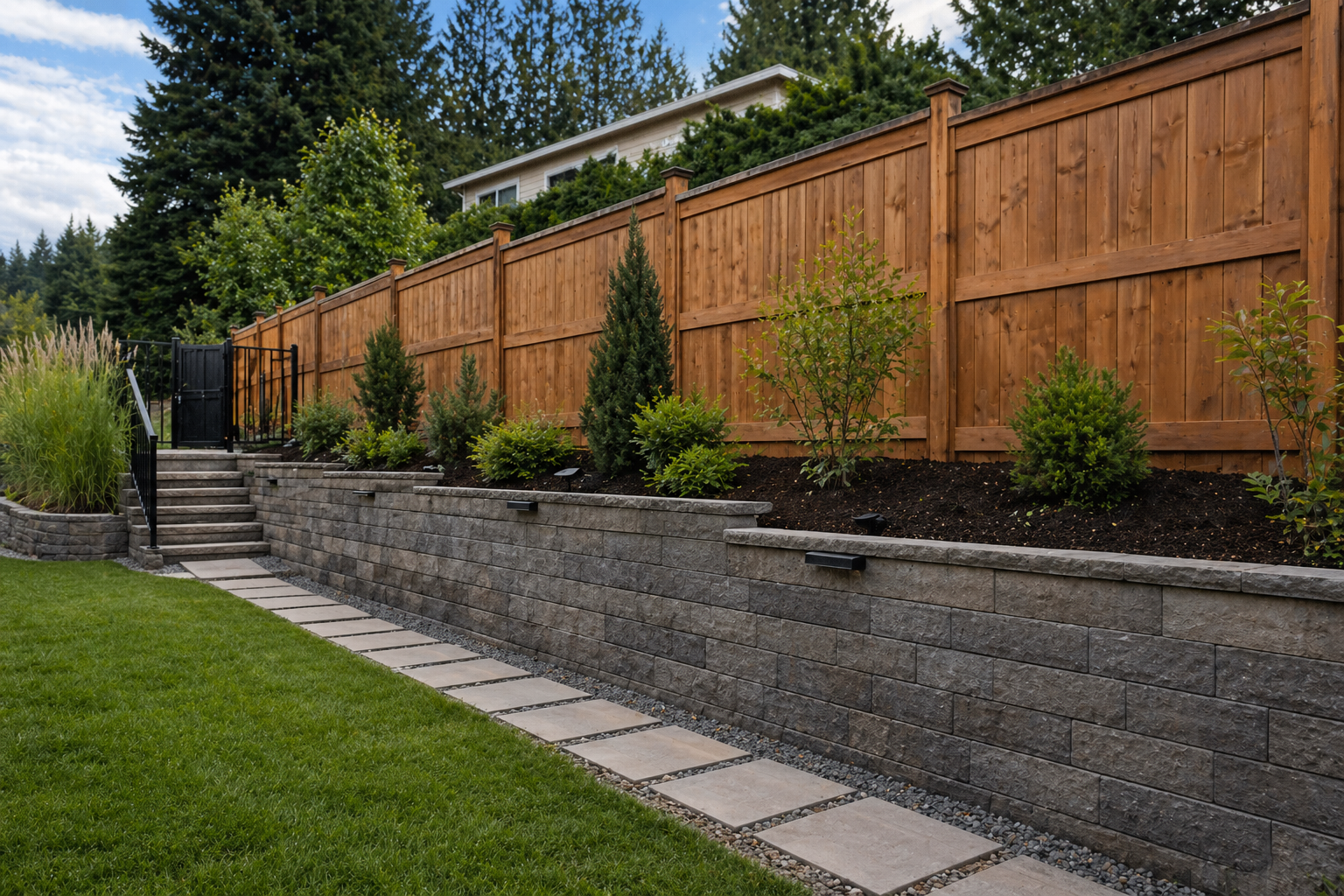
As spring arrives in the Shuswap region, many homeowners start thinking about upgrading their outdoor spaces. Whether it’s adding privacy, improving safety, or managing a sloped yard, fences and retaining walls are often at the top of the list.
But choosing the right solution isn’t always straightforward. Understanding the purpose of each structure — and when you may need both — can save you time, money, and future headaches.
Understanding the Difference
While fences and retaining walls can sometimes work together, they serve very different purposes.
A fence is primarily used to define boundaries, provide privacy, and enhance security. It can also improve curb appeal and create a more functional outdoor space for families and pets.
A retaining wall, on the other hand, is a structural element. Its main job is to hold back soil, prevent erosion, and stabilize sloped or uneven ground. In many Shuswap properties — especially those with elevation changes — retaining walls are not just aesthetic, they’re essential. They also help create more usable yard space, were previously unusable inclines, by transforming slopes into flat, functional areas, making room for patios, gardens, or other outdoor features.
When Do You Need a Retaining Wall?
In the Shuswap region, terrain plays a big role in property design. You may need a retaining wall if:
- Your yard has noticeable slopes or elevation changes
- You’re experiencing soil erosion after snowmelt or heavy rain
- Water is pooling or draining toward your home
- You want to create usable, level areas in your yard
A properly built retaining wall doesn’t just solve these problems — it transforms your outdoor space into something functional and visually appealing.
When Is a Fence the Right Choice?
Fences are ideal when your main goals are:
- Increasing privacy from neighbors or nearby roads
- Securing your property for children or pets
- Defining property lines clearly
- Enhancing the overall look of your yard
From traditional wood fencing to modern horizontal designs, there are many options to match your home’s style.
Common Mistakes to Avoid
One of the most common issues homeowners face is installing a fence where a retaining wall is actually needed. Without proper structural support, fences on sloped or unstable ground can shift, lean, or fail over time.
Another frequent mistake is overlooking drainage. In the Shuswap region, spring thaw and seasonal rain can put significant pressure on retaining walls. Without proper drainage systems in place, even a well-built wall can deteriorate prematurely.
Lastly, many homeowners underestimate the importance of proper planning. Property boundaries, local regulations, and long-term durability should always be considered before starting a project.
Choosing the Right Materials
The right material depends on your goals, budget, and the specific conditions of your property.
- Wood fencing offers a natural look and is a popular choice for privacy
- Pressure-treated lumber provides durability at a lower cost
- Concrete and segmental blocks are commonly used for retaining walls due to their strength and longevity
- Natural stone can create a high-end, timeless appearance
Each option has its advantages, and selecting the right one ensures your investment lasts for years.
Planning for the Shuswap Climate
The local climate plays a major role in how outdoor structures perform. Freeze-thaw cycles, snow load, and spring runoff all impact both fences and retaining walls.
That’s why proper installation — including foundations, drainage, and material selection — is critical. Building for local conditions ensures your project stands the test of time.
Final Thoughts
Fences and retaining walls are more than just additions to your property — they’re long-term investments in functionality, safety, and value.
If you’re planning an outdoor project this season, taking the time to choose the right solution — and building it properly — makes all the difference.
Thinking About Starting Your Project?
If you’re considering a fence, retaining wall, or a full backyard upgrade in the Shuswap region, the best time to start planning is now. Spring and early summer schedules fill up quickly, and early planning ensures your project is completed on time and done right. Reach out to our team to discuss your project and explore the best options for your property.