
What “Quality Construction” Really Means — And Why You Don’t Always See It Happening
A beautiful, finished project is easy to appreciate.
A new deck. A renovated kitchen. A retaining wall. A completely transformed outdoor space.
You see the finished result and think:
“That looks great.”
But here’s something interesting about construction:
A lot of the work that contributes to a successful finished project happens before you ever see the final product—and sometimes before materials even arrive at your property.
Quality construction isn’t simply about what something looks like on completion day.
It’s about the entire process that got it there.
The Project Starts Before Construction Day
From a homeowner’s perspective, the project may seem to begin when the crew arrives.
Behind the scenes, however, work may have already started.
Depending on the project, that can involve:
- Reviewing measurements and site conditions
- Planning materials and quantities
- Coordinating suppliers
- Ordering products
- Organizing equipment
- Scheduling crews and trades
- Planning project sequencing
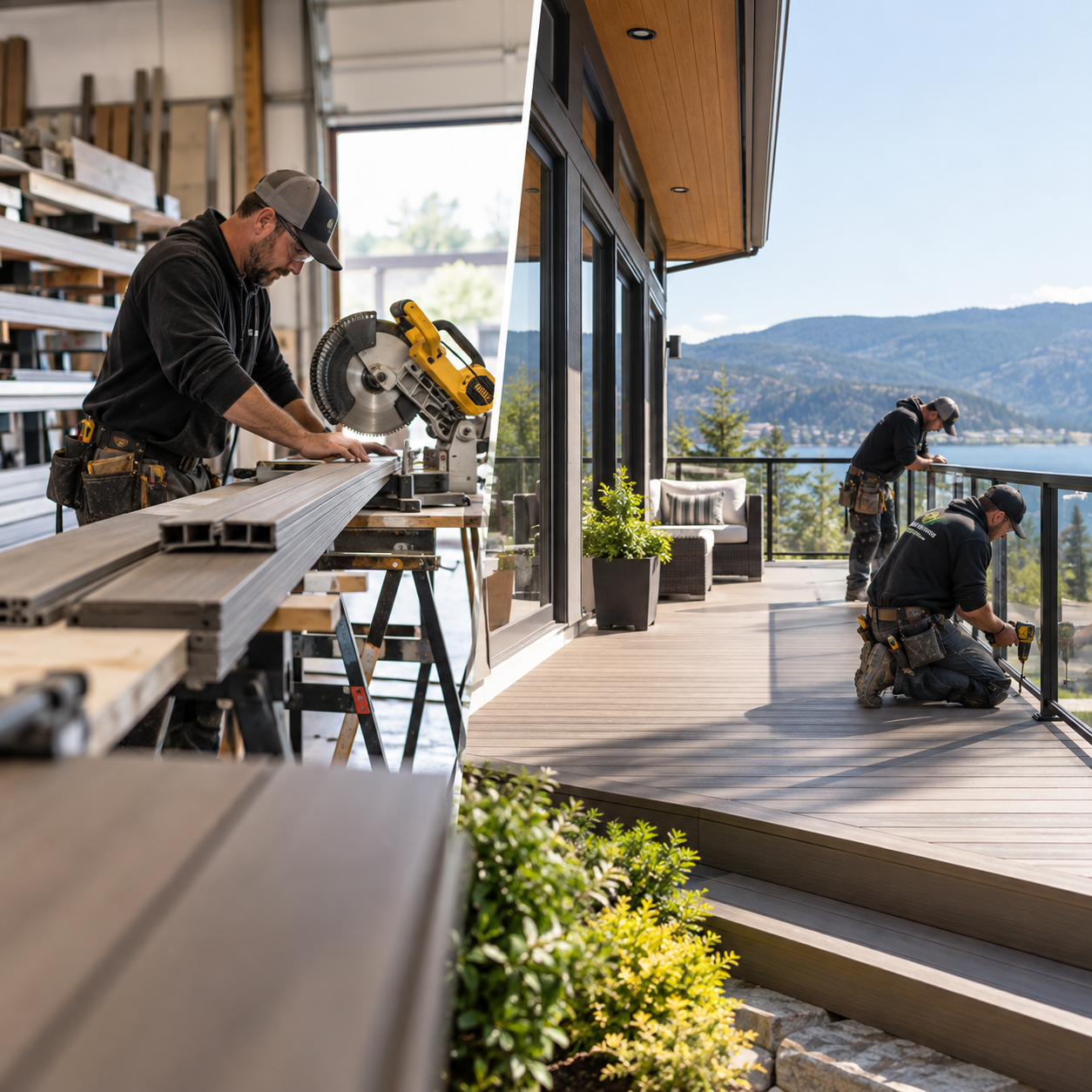
- Preparing or working on components before they’re transported to the site
Every project is different, but the point is simple:
Construction doesn’t always begin at the construction site.
Some of the work involved in delivering a project may happen somewhere the homeowner never sees.
Sometimes Materials Need Work Before They Reach Your Property
It’s easy to imagine construction materials arriving at the house exactly as they’ll eventually be installed.
That’s not always how it works.
Depending on the project and materials involved, components may need to be measured, cut, prepared, assembled, fabricated, modified, organized, or otherwise worked on before being transported to the jobsite.
Why?
Because sometimes it makes more sense to perform certain tasks in a controlled workspace with the appropriate tools and equipment.
It can also help organize the installation process once the crew reaches the property.
So, if you don’t see something being built directly in your driveway, it doesn’t necessarily mean work isn’t happening.
Part of the project may simply be happening somewhere else.
Quality Is Also About Planning the Sequence
Construction is a sequence.
One stage often needs to happen before another can begin.
And sometimes the best thing a contractor can do is not rush the next step.
Depending on the type of project, there may be:
- Materials that need preparation
- Products that need to arrive
- Work that needs appropriate time before the next stage
- Inspections or approvals where required
- Different trades that need to be coordinated
- Site or weather conditions that affect scheduling
That doesn’t mean every project follows the same process.
It means good construction requires understanding what needs to happen, when it needs to happen, and what needs to happen first.
More People Doesn’t Always Mean Faster
It’s tempting to think:
“If two people can do it in a week, why not put six people there and finish in two days?”
Construction doesn’t always work that way.
Certain tasks can absolutely benefit from additional crew members.
Others can’t.
Sometimes there simply isn’t enough physical space for multiple people to work efficiently.
Sometimes one stage needs to be completed before the next person or trade can begin.
And sometimes adding people doesn’t make the work faster—it just puts more people in the same space.
A well-managed project isn’t necessarily about having the largest possible crew onsite.
It’s about having the right resources at the right stage of the project.
The Details You Don’t Notice Can Matter
When a project is finished, most people notice the visible details first.
The colour.
The material.
The layout.
The finish.
And they should—those details are an important part of the project.
But there’s another side to construction that isn’t always obvious in the finished photo.
It’s the planning.
The preparation.
The measurements.
The coordination.
The material choices.
The way different components come together.
The decisions made along the way.
These aren’t necessarily the things that get photographed for Instagram.
But they’re part of the work behind the finished result.
Every Project Has Its Own Process
This is important.
There isn’t one universal construction process that applies to every project.
A deck isn’t built the same way as a bathroom.
A retaining wall doesn’t follow the same process as a kitchen renovation.
Even two apparently similar projects may require different approaches because of:
- Site conditions
- Existing construction
- Access
- Materials
- Design
- Weather
- Product requirements
- Project scope
That’s why understanding the individual project matters.
Quality construction isn’t about following one identical formula everywhere.
It’s about determining the appropriate approach for the specific job.
Sometimes the Smartest Work Is the Work You Don’t See
A homeowner may drive past a jobsite one afternoon and see nobody there.
That doesn’t automatically mean nothing is happening.
Materials may be getting prepared.
Orders may be getting coordinated.
A component may be worked on off-site.
Another stage may be scheduled.
A supplier or trade may be involved behind the scenes.
Or the project may simply be at a point where the next step needs to happen at the appropriate time.
The visible activity at a jobsite is only one part of a construction project.
It’s Not About Looking Good Just on Day One
Of course, we want the finished project to look great.
But that’s not the only goal.
The real objective is to create something that works for the client, suits the property, is constructed appropriately for its intended use, and continues to perform over time.
At Rooke Construction, we believe a successful project is the combination of what the homeowner sees and all the work that happens behind it.
Planning.
Preparation.
Coordination.
Craftsmanship.
Communication.
And knowing what the project needs at each stage.
Because the finished photo might show you what was built.
The process behind it tells you how much work went into getting there.