
Why a Great Renovation Doesn’t Always Mean Starting From Scratch
There’s a moment during many renovation conversations when someone looks around the room and asks:
“So… are we tearing EVERYTHING out?” 😅
And the answer might surprise you.
Not necessarily.
When we think about renovations, we often imagine demolition, dumpsters, everything stripped down, and an entirely new space taking shape.
And sometimes, that’s exactly what a project needs.
But other times, some of the things already in your home may still have value, character, or a perfectly good purpose.
The real question isn’t always “What should we replace?”
Sometimes it’s “What’s worth keeping?”
1. New Doesn’t Automatically Mean Better
It’s easy to assume that a successful renovation means replacing everything with brand-new materials.
But that’s not necessarily true.
An existing feature may still be functional, in good condition, and compatible with the new design.
For example, a homeowner might love their kitchen cabinets but dislike the colour. Or have hardwood flooring that has seen better days but could potentially be refinished.
In other cases, the existing materials may not be suitable for reuse, or the work required to preserve them may not make practical or financial sense.
The important thing is evaluating the options before making the decision.
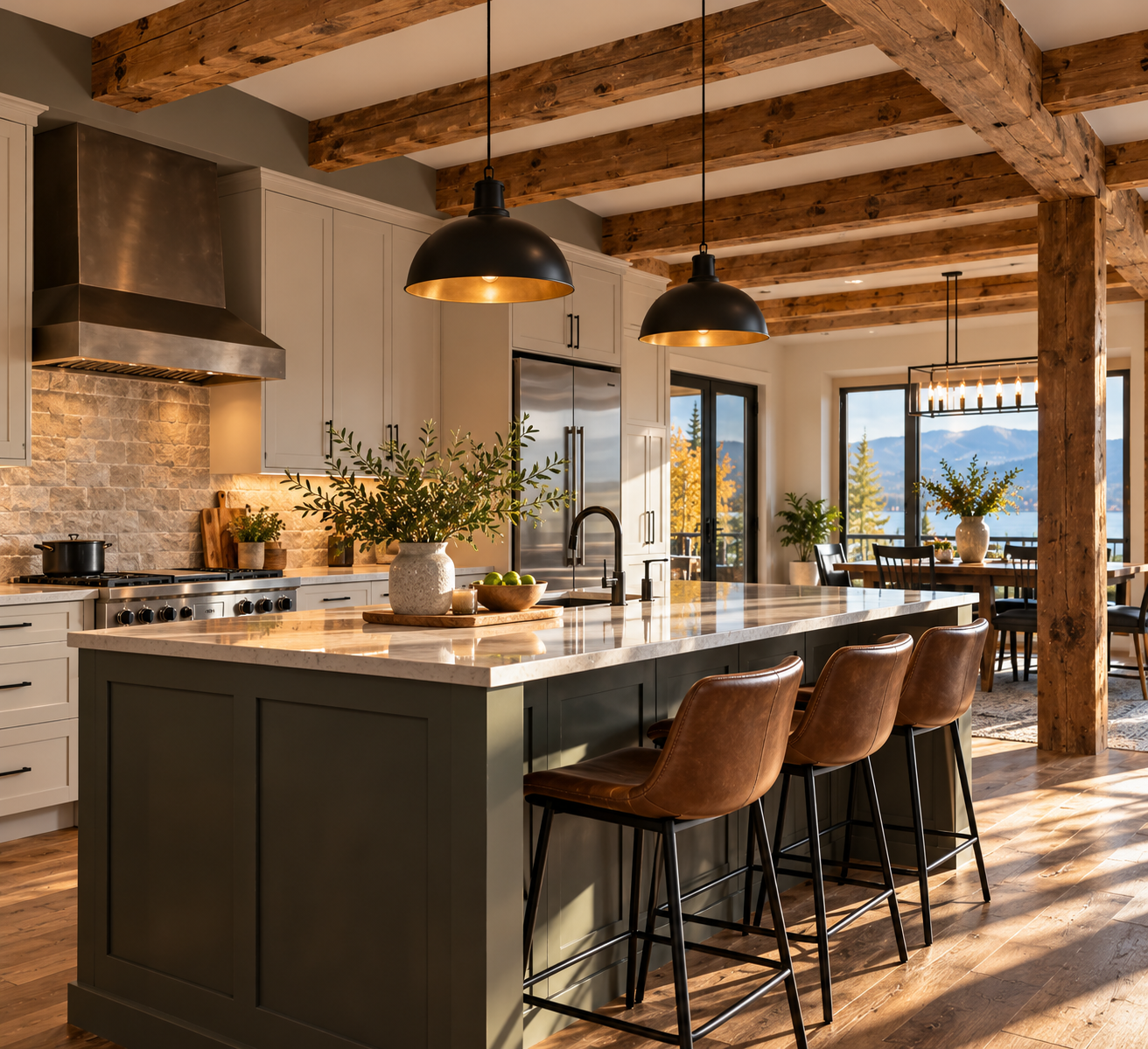
2. Your Kitchen Might Not Need a Complete Reset
Kitchens are a perfect example.
Maybe the cabinets are still in good condition, but the finishes feel outdated.
Perhaps the layout works well, but the countertops, backsplash or lighting could use an update.
Depending on the existing conditions, it may be possible to retain certain elements while updating others.
On the other hand, if the goal is to significantly change the layout, improve functionality or address underlying issues, a more extensive renovation may be the better solution.
There’s no universal answer.
And that’s exactly the point.
A renovation should be designed around what the space needs—not simply how much can be replaced.
3. Sometimes Older Features Have Character Worth Keeping
Not everything old is outdated.
Some homes have architectural details that give them personality.
Original woodwork.
Hardwood floors.
Exposed beams.
Distinctive trim.
Interesting architectural features.
These elements may be worth considering when planning a renovation, particularly if they complement the homeowner’s vision.
A thoughtful combination of existing and new materials can sometimes create a result that feels both fresh and connected to the character of the home.
Of course, condition, safety, compatibility and installation requirements must always be considered.
But a renovation doesn’t automatically have to erase everything that came before it.
4. What About Outdoor Spaces?
This idea isn’t limited to interiors.
Think about a deck, patio, fence or other outdoor structure.
Sometimes a homeowner wants to improve the appearance, functionality or layout of an existing space without necessarily rebuilding every component.
Could part of the existing structure remain?
Would a different railing improve the space?
Could the design incorporate an existing feature?
Or would rebuilding provide a more appropriate long-term solution?
For exterior structures, particularly those exposed to weather and moisture, a proper assessment is essential.
What looks acceptable on the surface may not tell the whole story.
Structural condition, existing construction, material compatibility and project requirements all influence what can reasonably be retained.
The goal isn’t to save something at any cost.
It’s to determine what makes sense for the project.
5. Keeping Something Doesn’t Always Mean Saving Money
Here’s an important detail that homeowners sometimes overlook.
Reusing an existing feature isn’t automatically the less expensive option.
Preserving something may require careful removal, preparation, modification, refinishing, additional labour or adjustments to accommodate new materials.
In some situations, that effort makes perfect sense.
In others, replacement may be more practical or cost-effective.
The decision should consider more than the price of a new product.
It should also consider the work involved, the desired result, the condition of the existing materials and how everything will function together.
Sometimes keeping something is the right choice.
Sometimes replacing it is.
Good planning means understanding the difference.
6. A Renovation Is About the Result, Not the Amount of Demolition
There’s something satisfying about a dramatic before-and-after transformation.
We all love those photos.
But the amount of demolition involved doesn’t determine how successful a renovation will be.
A project can involve extensive changes and deliver an incredible transformation.
Another project might retain several existing elements while dramatically improving how the space looks and functions.
Both can be successful.
What matters is whether the finished space meets the homeowner’s needs, suits the property and achieves the intended result.
7. Before You Renovate, Ask Three Questions
If you’re thinking about updating your home, start with these:
What do we actually want to change?
Is it the appearance, the layout, the functionality, the condition of certain materials, or a combination of these?
What do we genuinely like about the existing space?
There may be features worth incorporating into the new design.
What makes sense to keep, and what would be better replaced?
This is where assessing the existing conditions and discussing the options with a contractor becomes valuable.
You don’t necessarily need all the answers before starting the conversation.
That’s part of the planning process.
Sometimes the Best Transformation Starts With a Different Question
Renovation isn’t always about starting over.
It’s about looking at a space, understanding what works, identifying what doesn’t, and exploring how it could better serve the people living there.
Sometimes that means a complete transformation.
Sometimes it means carefully combining the old with the new.
And sometimes, the smartest decision is knowing when something has reached the end of its useful life.
At Rooke Construction, we work with homeowners throughout the Shuswap on interior renovations and outdoor construction projects, helping turn ideas into practical improvements suited to each property.
Because a great renovation isn’t measured by how much you tear out.
It’s measured by what you create.
And sometimes, that starts with one simple question:
“Can we save that?”